LINK Embrace Shoulder System
Many years of experience with successful implant systems and fixation concepts, as well as the latest material and coating technologies have been taken into account and applied in the design of the LINK Embrace Shoulder System. Designed as a versatile system, It covers a broad range of indications for anatomic and reverse treatment in both primary and revision cases.1
System Overview Humeral Options
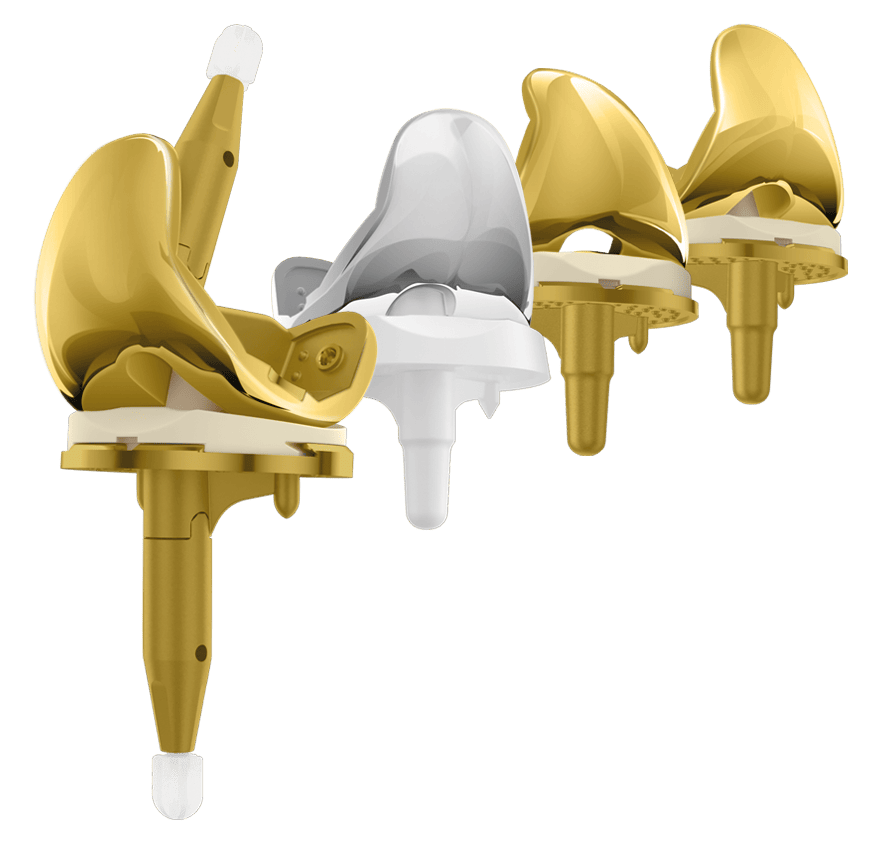
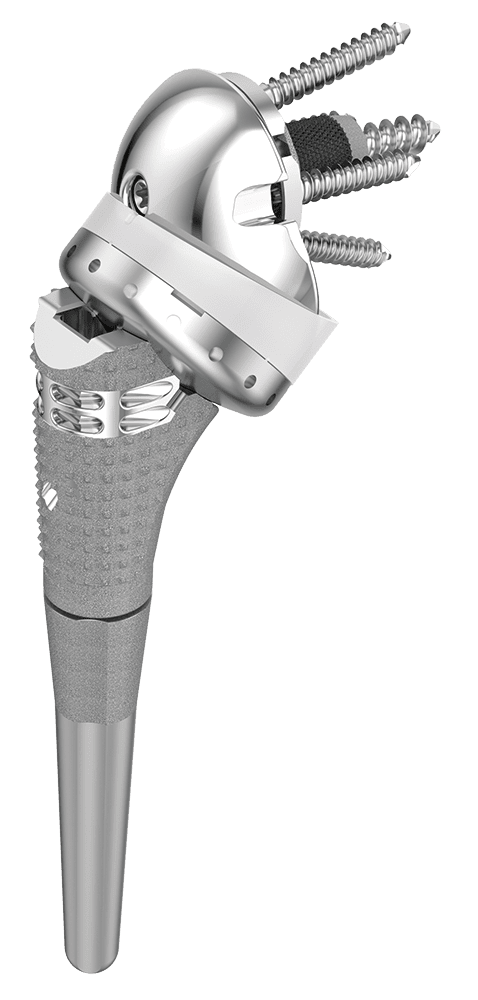
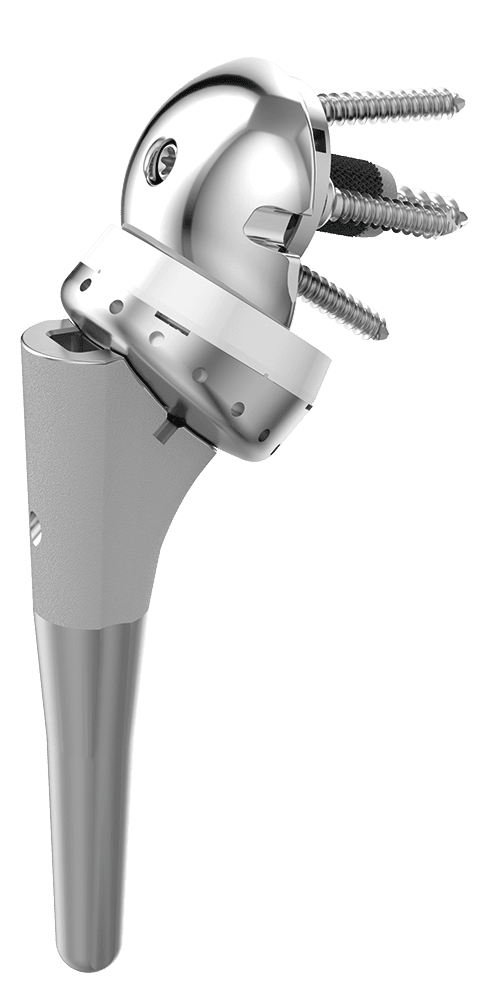
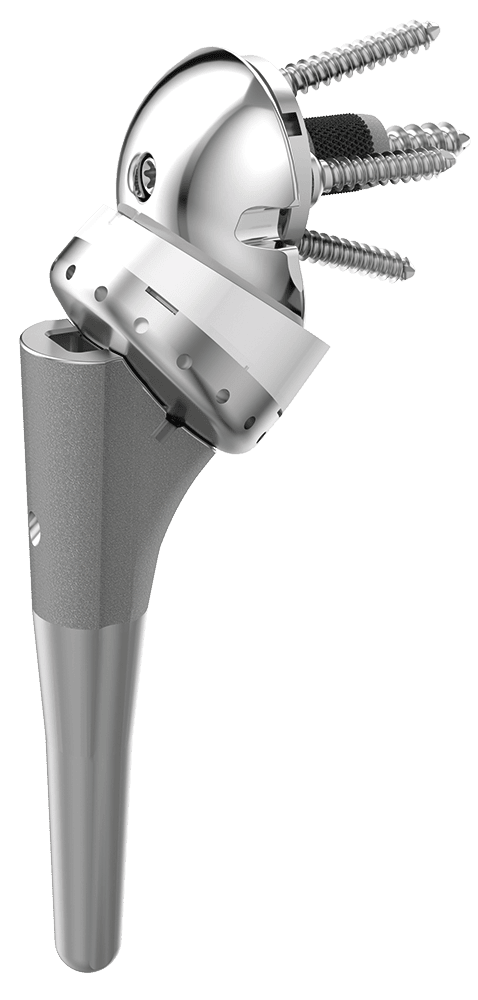
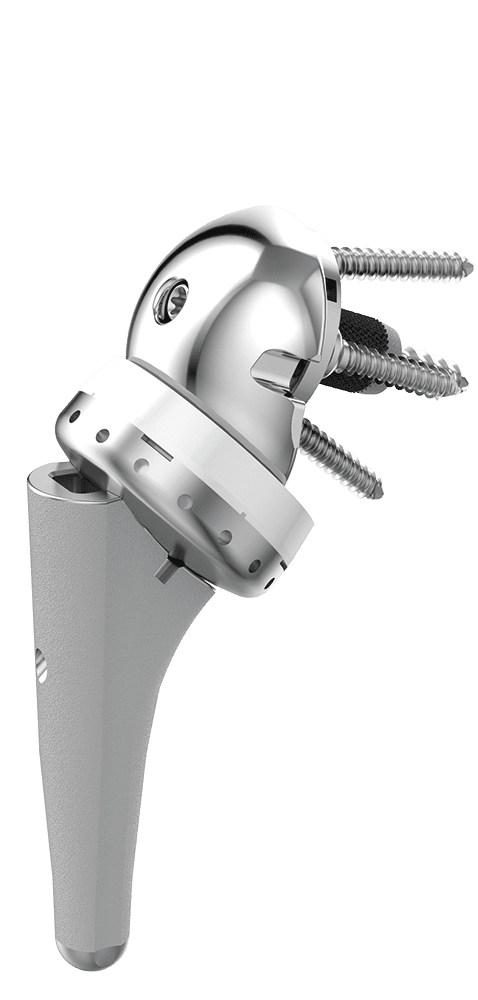
The LINK Embrace Shoulder System offers diverse fixation options suitable for the majority of patient populations and indications. A wide range of stems in different configurations allows for cemented and cementless fixation. Different types of Reverse Trays and Reverse Inserts offer several options for component alignment in all spatial planes.
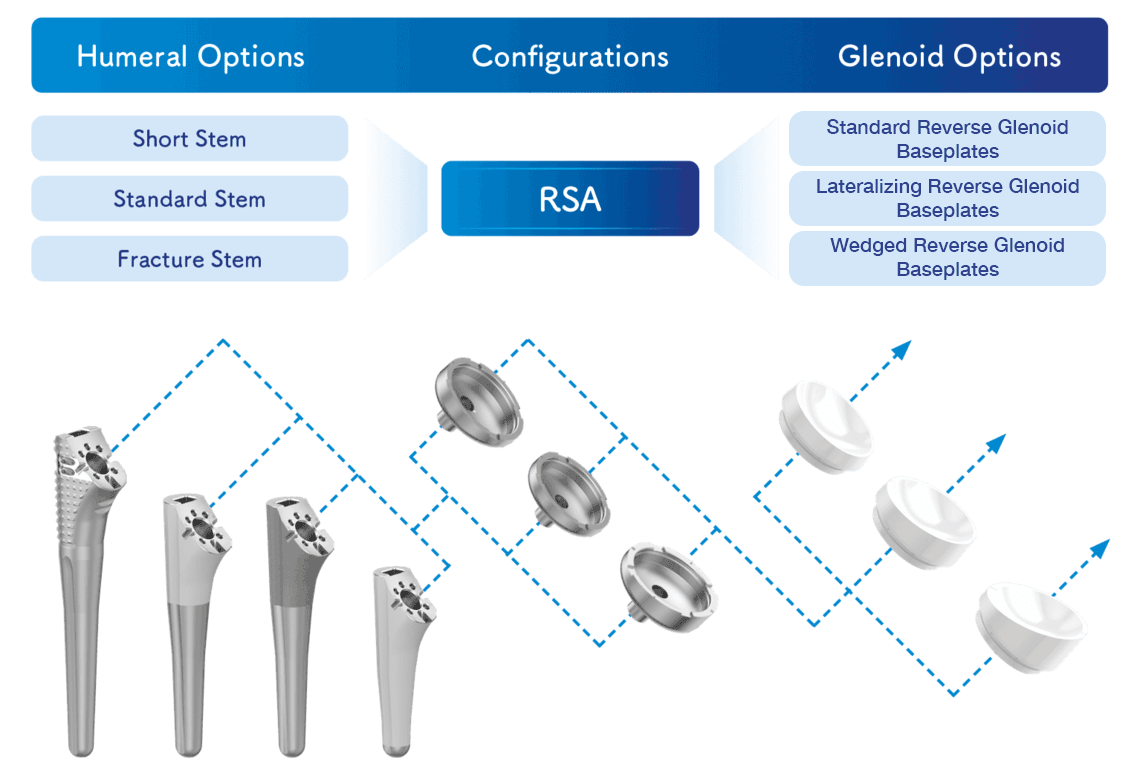
Humeral Components
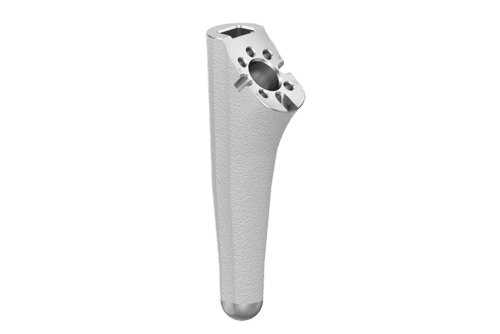
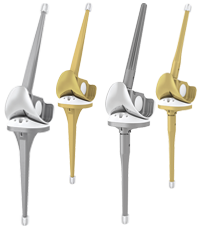
One of LINK’s major objectives in joint arthroplasty is the preservation of vital bone. In the LINK Embrace Shoulder System, Humeral Short Stems help to save valuable bone stock for possible future treatments and revisions.
For fracture and revision treatment
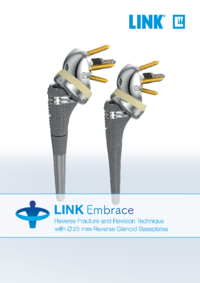
The system offers a set of modular Proximal Bodies in several sizes and heights to be paired with a broad range of Modular Stems, available in different diameters and lengths as well as different surface and coating options for cemented and cementless fixation.
The Proximal Bodies’ spiked surface, together with m-l and a-p holes for suture fixation, allow for stable and physiologic tuberosities reattachment. The modular concept of the fracture components supports the surgeon in achieving adequate joint restoration even in cases with poor anatomical landmarks.1

EXPLORE THE NEW WORLD OF SHOULDER SURGERY
System Overview Glenoidal Options
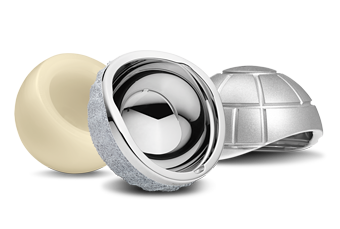
The glenoid components were designed specifically to address various treatment options depending on surgeon’s choice.1
Anatomic Configuration:
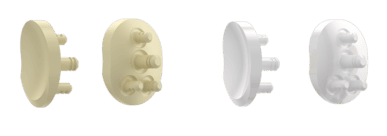
Cemented All-Poly Glenoid
Reverse Configuration:
Reverse Glenoid Baseplate
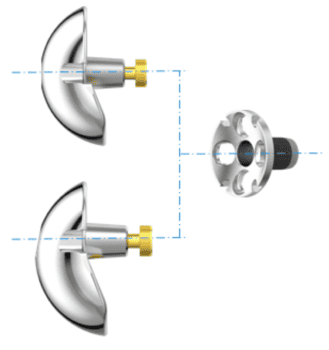
Reverse Glenoid Baseplates
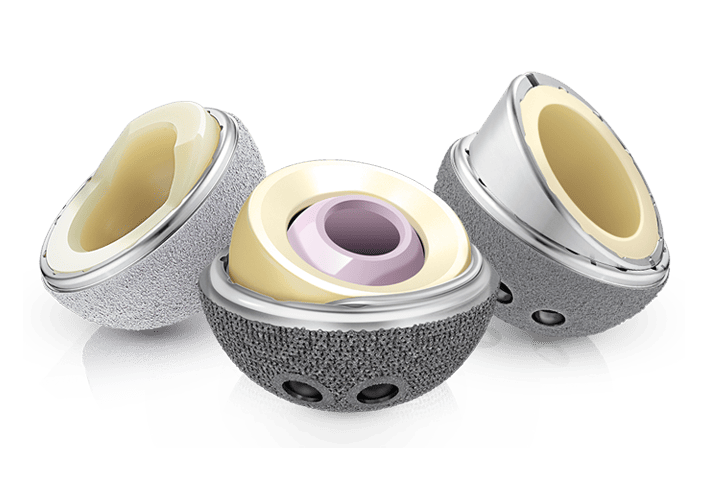
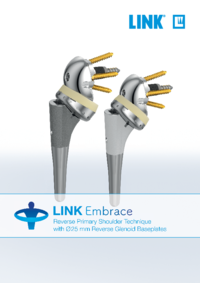
Depending on preference, the surgeon can choose from multiple types of the Reverse Glenoid Baseplates. Thanks to its elaborated design it hosts a central Bone Screw and 4 peripheral Bone Screws. Depending on the Reverse Glenoid Baseplate type, the surgeon can select from angle-stable (locking), polyaxial angle-stable (locking) and standard screw fixation with cortical and cancellous thread design.1 Standard Reverse Glenoid Baseplates as well as lateralizing Baseplates are designed with a curved back side resulting in bone sparing preparation and better fixation.7 Wedged Baseplates with different offsets and angulations as well as long pegged Baseplates have a flat back side, these are suitable for glenoid reconstruction to address glenoid defects and glenoid bone loss.3
This range of humeral and glenoid fixation options can be applied in all common configurations of shoulder arthroplasty. This facilitates the right treatment for each individual indication by appropriate component selection, adaption, fixation, size, offset, version and joint tension.2
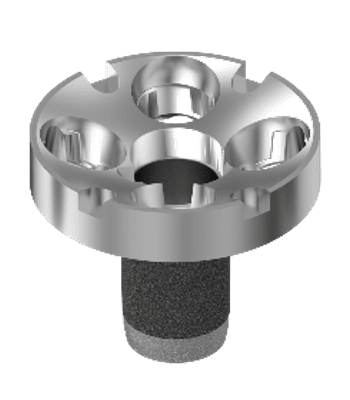
+3
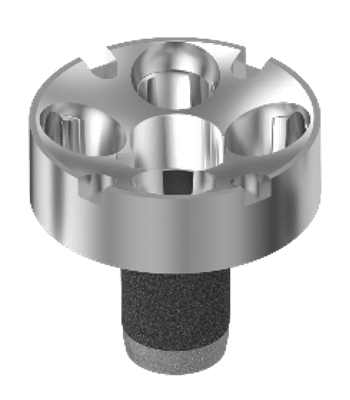
+6
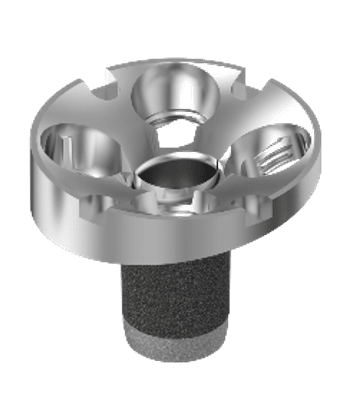
10°
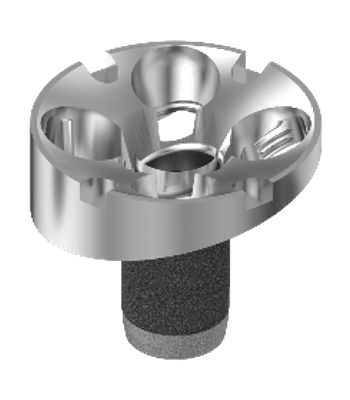
15°
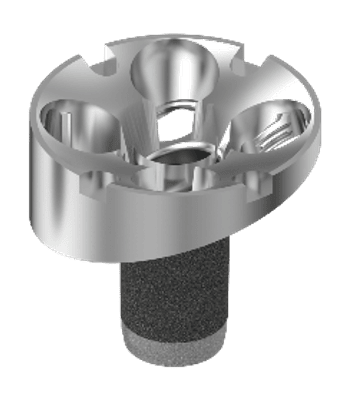
20°
DON´T FIGHT THE CHANGE. EMBRACE IT!
Instruments
The LINK Embrace Shoulder System is implanted by means of a streamlined, lightweight and ergonomic instrument set, allowing for straightforward workflow and high reproducibility.
Multi-purpose instruments and elaborated trial components help to reduce the amount of instruments and number of trays, thus enhancing the intra-operative handling and safety for both OR-staff, surgeon and patient.1


Sources
- Internal document W. Link (DOC-11035)
- Internal document W. Link DOC-12528)
- Crosby et al. Conversion to Reverse Total Shoulder Arthroplasty with and without Humeral Stem Retention: The Role of a Convertible-Platform Stem. J Bone Joint Surg Am. 2017;99:736-42
- Castagna et al. Conversion of shoulder arthroplasty to reverse implants: clinical and radiological results using a modular system. International Orthopaedics (SICOT) (2013) 37:1297–1305.
- Kany et al. A convertible shoulder system: is it useful in total shoulder arthroplasty revisions? International Orthopaedics (SICOT) (2015) 39:299–304.
- Roche et al. Impact of Inferior Glenoid Tilt, Humeral Retroversion, Bone Grafting, and Design Parameters on Muscle Length and Deltoid Wrapping in Reverse Shoulder Arthroplasty. Bulletin of the Hospital for Joint Diseases 2013;71(4):284-93.
- Strauss et al. The glenoid in shoulder arthroplasty. Journal of Shoulder and Elbow Surgery (2009) 18, 819-833
- Patel M, Rao A, Edirisinghe Y. Glenoid reconstruction for primary or revision shoulder arthroplasty using a metal-backed long pegged glenoid implant and iliac crest autograft or allograft. In Proceedings of the 12th International Congress of Shoulder and Elbow Surgery (ICSES); 2013 Apr 10–12; Nagoya, Japan.